
Home › Blog › Ao dai photoshoot in Hanoi
Ao Dai Photo Shoot Hanoi Old Quarter Sunrise: When, Where, How
By the Hanoi Photoshoot team · 2026-11-06
A sunrise ao dai photo shoot in Hanoi's Old Quarter means arriving by 4:30am at spots like Train Street or Hoan Kiem Lake to capture soft golden light before 7am crowds arrive. We at Hanoi Photoshoot by Cáo Studio coordinate the session with makeup and styling on-site, scouting 2–3 backup locations for rain or closed access. The golden hour lasts 30–45 minutes; you'll shoot 80–120 final frames across two outfits. Expect 3–4 hours total (prep, two locations, travel). Sunrise sessions avoid summer heat, suit romantic or editorial ao dai aesthetics, and work year-round except monsoon downpours. Rules vary by temple—some allow shoots 5–6am, others enforce 7am gates. Costs depend on outfit complexity, makeup, hair, and rental; ask us for a quote on WhatsApp. Common failures: late arrival (light gone), no temple permission (guards turn you away), wet ao dai hems (slows reshoots), and shoes slipping on wet stone steps. Check dates on WhatsApp
Why does sunrise work better than midday for ao dai in Old Quarter?
Sunrise light at Old Quarter temples and streets is soft, directional, and flattering—shadows fall at lower angles, highlighting embroidery and fabric detail without harsh glare. By 7am, tour groups flood Train Street; 5–6am gives you solo access to symmetrical shots and uncluttered backgrounds. Afternoon heat (28–35°C most months) wilts makeup, darkens fabrics, and creates overhead shadows that flatten features. We choose sunrise because it compresses shooting time into a calm window and eliminates re-touching for sweat and color grading for heat haze.
What time in each season gives the best light?
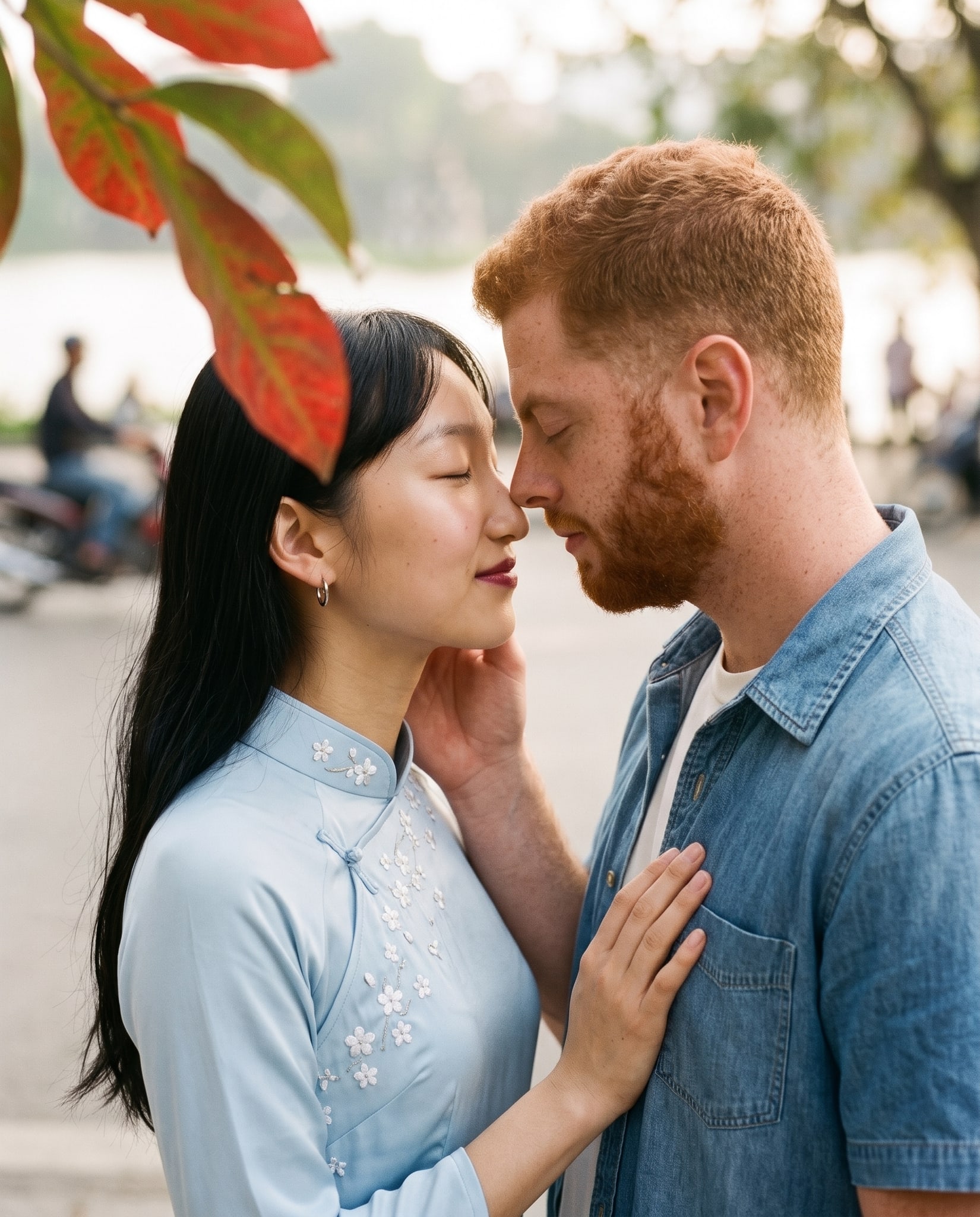
Sunrise timing shifts year-round. November–February (cool, dry): first light 6:30–6:45am, best window 5:45–7:15am. March–May (humid, hazy): light arrives 5:45–5:55am, window shrinks to 5:30–7am as heat builds. June–September (monsoon): light soft at 5:30–5:50am but rain risk peaks; storms arrive 8–9am. October (transition): 5:50–6:10am, clear light, predictable. Book earliest in your season to avoid heat, haze, and unpredictable downpours; we adjust shoot time based on moon phase, weather forecast, and temple opening hours 24 hours before.
Which Old Quarter spots allow pre-dawn ao dai shoots?
Hoan Kiem Lake shores permit 5am starts; no permit needed. Train Street (Phung Hung) technically requires vendor permission—we coordinate this or scout nearby Ong Ich Khiem Street as backup (same light, fewer crowds, no rules). Hang Trong temple allows 5:30am entry for guests shooting; Quan Su pagoda opens 6am (no photography before). Western corners near Long Bien Bridge offer unguarded heritage lanes; less iconic but rule-free. Lake-side walks toward Red River dike work 4:45am onward, no crowds until 7am. We always scout the night before and have two backup locations if your first choice is locked or undergoing repairs.
What ao dai style and fabric work best in pre-dawn light?
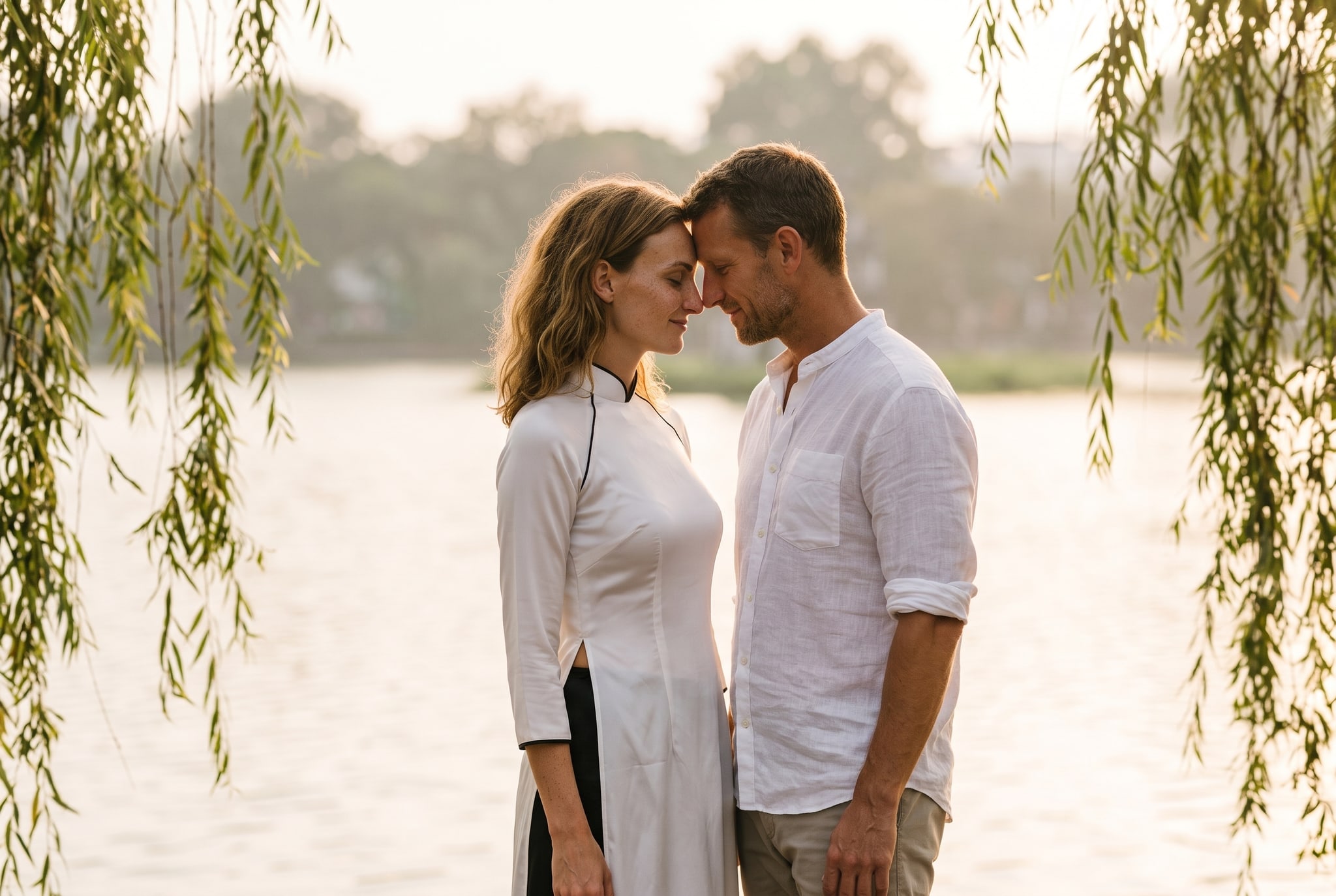
Embroidered, silk, or brocade ao dai in jewel tones (emerald, crimson, navy, mustard) glow under low golden angles; plain cotton ao dai flatten. Glossy fabrics catch light beautifully at sunrise; matte or aged fabrics need closer angles. Long-sleeve or three-quarter designs photograph better than sleeveless (dawn air is cool, looks natural, no goosebumps). Colors photograph true in natural light without white-balance shifts. For rental, we stock traditional and modern designs; check our makeup and styling options to ensure your chosen ao dai pairs with the light and your skin tone. Avoid white or cream unless it's silk (cotton goes gray at low angles). Bring a backup outfit in case your first gets wet steps or mud splatter—we plan for this.
What can go wrong, and how do we prevent it?
| Risk | Cause | How We Avoid It |
|---|---|---|
| Light fades before second location | Late arrival (traffic, makeup lag) | We start makeup at 4pm prior day or 3am on shoot day |
| Ao dai hem soaked, makeup streaks | Wet stone, dew, or early rain | We bring a hem roll, umbrellas, waterproof makeup; shoot elevated areas first |
| No access (temple locked, vendor refuses) | Permit not arranged or expired | We call venues day-before; keep two backup spots scouted |
| Faces overexposed, fabrics dark | Sunglasses on until last minute, camera exposure error | We meter on fabric, not skin; keep sunglasses on until 30 seconds before |
| Crowd rushes in (tour buses, vendors) | Off-peak window narrower than expected | We have a "golden hour wrap" time and transition to secondary spots by 6:30am |
| Shoes slip on ancient steps | Damp moss, worn stone, no grip | We bring grip tape, choose shoes with tread, scout step angles first |
Each risk is baked into our safety checklist; we carry a weather radio and a second ao dai rental on standby.
How does a sunrise shoot fit into longer Hanoi session plans?
A pre-wedding photoshoot often pairs sunrise ao dai with midday couple portraits at lake-side cafés or heritage buildings (different aesthetic, bigger frames). A solo travel portrait session might start sunrise, rest 8am–3pm, then shoot sunset near Red River Bridge for two contrasting moods. Family photoshoot groups scheduling multi-day sessions sometimes anchor one morning around ao dai to honor heritage, then do casual wear shots later. We design itineraries that layer sessions by light and energy; ask us to align your shoot with other priorities (engagement announcement, social media rollout, family reunions). Most clients book sunrise as a standalone 3-hour block, then add evening golden hour separately.
What to check before booking
- Weather forecast: Check 3 days out; we shift time or swap dates if rain probability exceeds 40% (monsoon season especially).
- Temple hours: Confirm with us 24 hours prior—some temples close for festivals or maintenance without notice.
- Ao dai fit and color: Show us reference images; we'll suggest designs that match light and your skin tone, not just rental stock.
- Backup outfit: Bring one casual alternative (jeans + shirt) in case ao dai gets damaged or you want a contrast shot.
- Footwear: Wear clean, grip-soled shoes; bring slip-ons for temple steps (some require bare feet at shrines).
- Crew arrival time: Confirm makeup start time (usually 3pm day-before or 3am day-of); late arrivals compress light window and ruin shots.
Why book with Hanoi Photoshoot by Cáo Studio for Old Quarter sunrise?
We shoot only in Hanoi—this isn't a secondary market for us. We know which temples grant 5am access, when Train Street vendors arrive, which monsoon patterns kill light, and how fabrics behave under low angles. Our team includes in-house makeup, hair, and ao dai rental; we don't outsource styling, so you're not coordinating three vendors. We scout locations the evening before and keep two backups in mind. We shoot non-models naturally; no "stand there" poses—we guide your gaze, angle, and breathing to look authentic on camera. See our full ao dai photoshoot guide for other Hanoi options (couple, maternity, graduation) and choose what fits your story.
Plan your Hanoi shoot
FAQ
Do we need a permit for sunrise shoots at Temple in Old Quarter?
Most temples allow 5:30am–6am access for visitors and photographers; no formal permit required, but we call ahead to confirm. Train Street vendors don't issue permits—we scout timing to avoid confrontation. Hoan Kiem Lake is public; no permit needed.
What happens if it rains the night before?
We check weather 24 hours prior. If rain is forecast, we reschedule to the next clear sunrise or shift to an indoor heritage building with large windows (less ideal, but covers your date). We don't charge rebooking fees for weather.
How many outfit changes can we fit into a 3-hour sunrise session?
Two full ao dai outfits comfortably: 30 min prep + makeup, 45 min location one (first outfit), travel/wardrobe swap (15 min), 45 min location two (second outfit). A third outfit compresses time and risks losing light at the second spot.
Will sunrise shots look different from afternoon ao dai sessions?
Yes. Sunrise light is warm, directional, soft—good for close-ups, detail shots, and romance. Afternoon light (3–5pm) is brighter, flatter, cooler—suited for group shots and bold colors. We recommend sunrise for editorial, solo, or pre-wedding; afternoon for family and group sessions.
Can we shoot at Hoan Kiem Lake and Train Street in one 3-hour session?
Yes. Both are 200m apart. We'd shoot Lake 5:30–6:15am (calm water, uncluttered), travel, then Train Street 6:30–7:15am (architecture, tight framing). Light quality holds; crowd influx begins 7:30am. Timing is tight but proven.
What do we bring to an ao dai sunrise shoot?
We bring makeup, hair products, ao dai, and photography gear. You bring sunglasses (wear until the final minute), slip-on shoes for temples, a phone charger, and a backup outfit (casual wear). Bring water; we shoot 3–4 hours and dawn air is dry.
Check dates
Send your dates, how many people and the style you like. We reply on WhatsApp in English with spots, timing and a quote.
FAQ
Do we need a permit for sunrise shoots at Temple in Old Quarter?
Most temples allow 5:30am–6am access for visitors and photographers; no formal permit required, but we call ahead to confirm. Train Street vendors don't issue permits—we scout timing to avoid confrontation. Hoan Kiem Lake is public; no permit needed.
What happens if it rains the night before?
We check weather 24 hours prior. If rain is forecast, we reschedule to the next clear sunrise or shift to an indoor heritage building with large windows (less ideal, but covers your date). We don't charge rebooking fees for weather.
How many outfit changes can we fit into a 3-hour sunrise session?
Two full ao dai outfits comfortably: 30 min prep + makeup, 45 min location one (first outfit), travel/wardrobe swap (15 min), 45 min location two (second outfit). A third outfit compresses time and risks losing light at the second spot.
Will sunrise shots look different from afternoon ao dai sessions?
Yes. Sunrise light is warm, directional, soft—good for close-ups, detail shots, and romance. Afternoon light (3–5pm) is brighter, flatter, cooler—suited for group shots and bold colors. We recommend sunrise for editorial, solo, or pre-wedding; afternoon for family and group sessions.
Can we shoot at Hoan Kiem Lake and Train Street in one 3-hour session?
Yes. Both are 200m apart. We'd shoot Lake 5:30–6:15am (calm water, uncluttered), travel, then Train Street 6:30–7:15am (architecture, tight framing). Light quality holds; crowd influx begins 7:30am. Timing is tight but proven.
What do we bring to an ao dai sunrise shoot?
We bring makeup, hair products, ao dai, and photography gear. You bring sunglasses (wear until the final minute), slip-on shoes for temples, a phone charger, and a backup outfit (casual wear). Bring water; we shoot 3–4 hours and dawn air is dry.
More like this
Ao dai photoshoot in Hanoi
Ao Dai Photoshoot at Ho Chi Minh Mausoleum: Best Time & Tips
Ho Chi Minh Mausoleum area offers dramatic colonial architecture and red flags perfect for ao dai portraits, but timing and permit rules are critical.
Ao dai photoshoot in Hanoi
Ao Dai Photoshoot at Lotus Pond Sunrise in Hanoi
Lotus ponds offer Hanoi's most serene ao dai backdrop at dawn, but timing and location scouting are critical for empty frames and soft light. We share exact hours, seasonal water levels and how to avoid tourist crowds.
Ao dai photoshoot in Hanoi
Ao Dai Photoshoot Duong Lam Ancient Village: Best Time & Hanoi Guide
Duong Lam Ancient Village—45 minutes northwest of central Hanoi—offers weathered brick lanes, lotus ponds and colonial-era storefronts perfect for ao dai portraits. Best light and crowd conditions occur October–November and February–March mornings.