
Home › Blog › Ao dai photoshoot in Hanoi
Ao Dai Photo Shoot Hanoi Ideas: 7 Poses & Spots for 2026
By the Hanoi Photoshoot team · 2026-11-06
An ao dai photoshoot in Hanoi pairs the traditional silk tunic with Hanoi's layered backdrops—colonial architecture, incense-filled courtyards, reflective lakes—shot cleanly in 2–4 hours with in-house styling by Cáo Studio. We recommend Hoan Kiem Lake for serene water reflections (early morning, 6–7 a.m., minimal crowds); Old Quarter temples for cultural depth (respecting prayer times, no shoes indoors, modest framing); Train Street for dramatic urban texture (tight single-file poses only, police patrols 7–9 a.m., afternoon light best). Sessions include ao dai rental, makeup and hair tailored to the fabric weight and humidity (Hanoi peaks 80–90% April–September), posing direction for non-models, and edited images within 3 weeks. Ask us for a quote on WhatsApp—budget scales with session length, stylist time, and rental dress complexity. Avoid midday (11 a.m.–3 p.m.) harsh overhead light, rainy season monsoons (May–August street flooding), and temple festivals (crowds, photography restrictions). Check dates on WhatsApp
How do temples in Hanoi shape ao dai poses?
Temple courtyards—particularly the Old Quarter's centuries-old pagodas with incense coils and stone carvings—create natural frames for ao dai. We shoot you standing still in the doorway, arms at sides or one hand touching the fabric; seated on low benches with legs angled (not crossed); walking slowly toward the camera with the tunic flowing behind. Temple rules: no entry during active prayer (7–8 a.m., 5–6 p.m.); remove shoes on the threshold; frame you against doors and pillars, never prayer altars. The ao dai's long panels catch side-light beautifully in these shadowed, narrow spaces—the fabric becomes sculptural. This restraint and cultural respect sets temple shots apart from lake and street work.
Which season gives the cleanest light for ao dai in Hanoi?
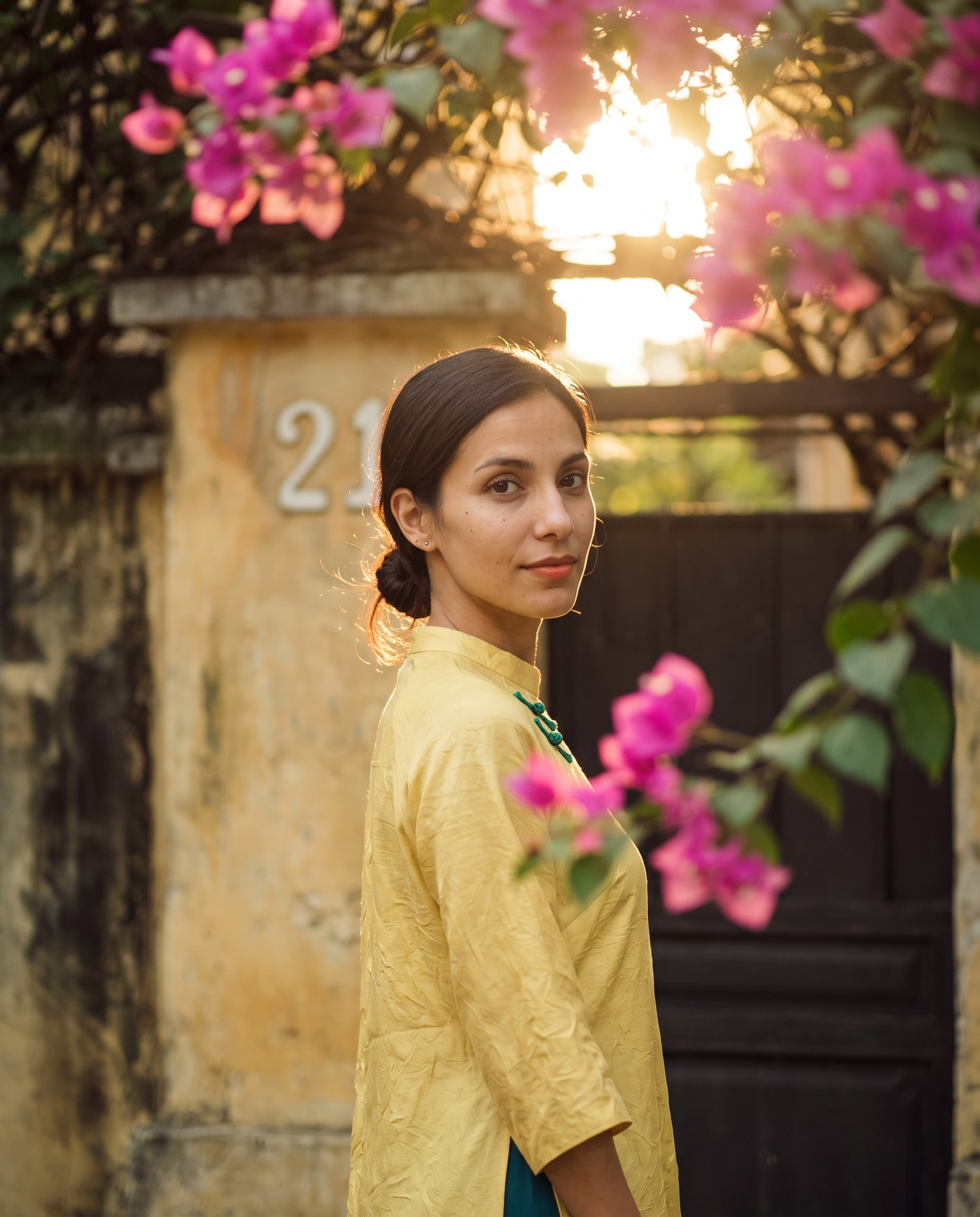
October–November (autumn) and February–March (early spring) deliver 60–70% humidity, stable skies, and warm-gold light at sunrise and sunset—ideal for the silk's natural sheen without blown highlights or sweat-soaked styling. Avoid May–August: 85–90% humidity wilts makeup and makeup takes 45 minutes to reset; June–August monsoons bring overcast skies and flooding. December–January is cool (12–18°C) and low-humidity but clear skies can be too bright by 7 a.m., requiring fill reflectors or shaded courtyards. We book autumn and spring sessions earliest; rainy season work (May–August) requires contingency indoor spaces or rescheduling.
What posing mistakes do non-models make in ao dai?
Non-models often stiffen shoulders, hold the ao dai at the hem (creasing it), or walk like runway models in a garment meant for stillness. The tunic drapes naturally; your job is to stand upright, let your arms hang, and breathe. Common fixes: place one hand on your thigh (sitting), let the opposite arm flow at your side (standing), or hold the fabric at the hip seam—not the hem—when walking. We show you these positions on arrival; expect 15–20 minutes of posing practice before the shoot begins, so you feel grounded, not coached. Smiling is secondary to presence; many ao dai shots are serene, not beaming.
How does ao dai rental work with makeup and hair?
We hold 20+ ao dai in-house in sizes XS–XL, ranging from classic white cotton to embroidered silk and gradient hues. On booking, you tell us your preferred color and fit; we reserve it. Session day, our stylist arrives 60–90 minutes early, does hair (often a low bun or half-up to show the neckline and earrings), applies makeup for the garment's formality and Hanoi's humidity, then dresses you—ensuring the underskirt sits flat and the tunic's front panels align. If the ao dai needs alteration (hem, shoulder), we schedule a pre-shoot fitting. Rental includes a full wash and press. Ask us for a quote on WhatsApp—costs vary by dress complexity and styling time needed.
Why does Train Street light differ from lakes?
Train Street runs narrow, brick-walled, and west–east, so morning light (6–7 a.m.) rakes across the track low and golden; afternoon (4–5 p.m.) light comes from the side, throwing sharp shadows. Lake reflections at Hoan Kiem diffuse light and cool tones; Train Street absorbs warmth and textures. Train Street requires single-file positioning (space is 8–10 feet wide); lake work allows wider spacing and multiple angles. Train Street draws police patrols 7–9 a.m. and afternoon tourist buses, so we shoot early or after 5 p.m. The ao dai's red, gold, or white pops against the muted brick better than pastels—choose warm tones if you're drawn to Train Street. This trade-off—dramatic urban context versus crowd risk—shapes the mood entirely.
What's the difference between couple and solo ao dai shoots?
| Focus | Solo Ao Dai | Couple Ao Dai | Who It's For | Timing | Why Choose It |
|---|---|---|---|---|---|
| Poses | Standing, walking, seated detail shots | Embracing, walking hand-in-hand, face-to-face | Solo travelers, personal milestones | 2 hours | Full attention on your presence and tunic |
| Backdrops | Lakes, temples, street | Lakes, courtyard arches | Engagements, anniversaries, first visits | 2.5–3 hours | Shared emotion and symmetry in framing |
| Styling | One ao dai, simple hair | Coordinated ao dai colors or matching embroidery | Anyone in a traditional moment | Parallel setup | Intimacy and storytelling; see couple photoshoot |
| Cost Basis | Lower; one dress rental | Higher; two dresses, dual makeup | Budget-conscious soloists or pairs | Similar hourly rate | Personal archive vs. relational memory |
Solo shoots are ideal if you're traveling alone, celebrating a personal goal (promotion, visa milestone, first time in Vietnam), or want gallery-quality portraits. Couple work frames intimacy; solo work frames you. We handle the transition between locations so you don't break character.
Why does humidity matter for ao dai hair and makeup?
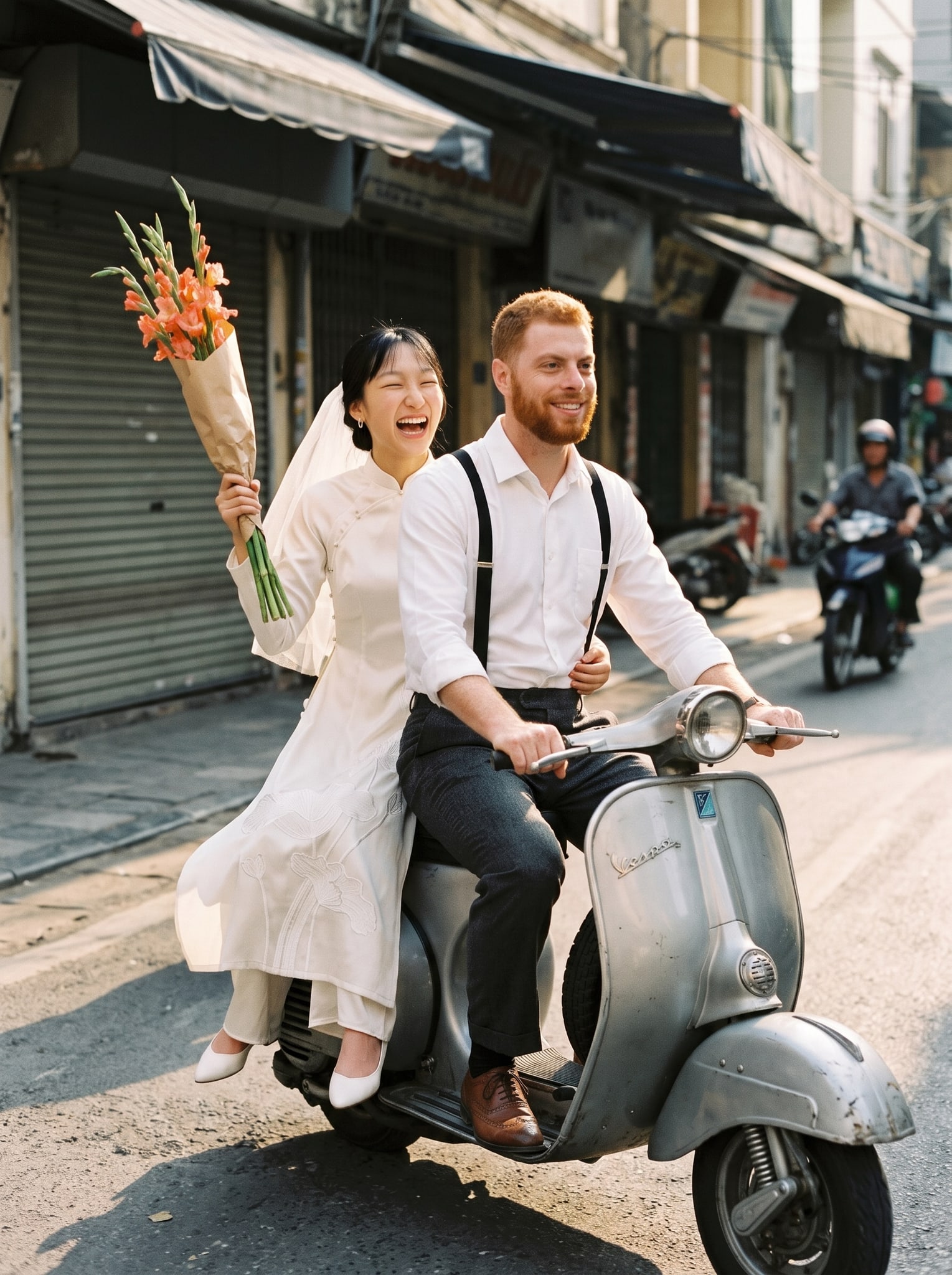
Hanoi's April–September humidity (80–90%) loosens hair curls within 30 minutes and melts powder makeup in patches. We use tropical-grade products (silicone primers, long-wear foundations) and pin hair tighter—often with a net underneath—to last 2–3 hours before touch-up. Autumn/spring humidity (60–70%) means looser styles and lighter makeup stay put. This isn't vanity; it's logistics. A sweat-soaked forehead or frizz breaks the ao dai's calm, formal line. Plan 20–30 minutes extra for humidity touch-ups during a shoot. If you're coming from a humid climate (Bangkok, Manila, Singapore), your skin is used to this; tell our stylist about any products that work for you.
What happens if rain or crowds crash your session?
Hanoi's monsoon season (May–August) brings sudden afternoon downpours; Old Quarter flooding can cut off temple access. We scout the forecast 48 hours before; if heavy rain is forecast, we reschedule or pivot to covered Old Quarter arches and shophouse interiors (colonnades, shuttered windows as backdrops). Train Street closes during heavy rain (safety, puddles). For crowds: we book early morning (6:30–7:30 a.m.) to avoid tour groups at temples and Hoan Kiem Lake. If a crowd swells mid-session, we move to a secondary spot—a smaller temple, a quiet residential lane, a lake inlet—without losing momentum. Reschedules within 2 weeks are free; costs do not change.
Comparison: where to shoot ao dai, by mood
| Spot | Light (Best Hour) | Crowds | Rules | Ao Dai Style | Mood |
|---|---|---|---|---|---|
| Hoan Kiem Lake | 6–7 a.m., 4–5 p.m. | Minimal before 8 a.m., heavy by 9 a.m. | Stay on paths, no wade | Classic white or pastels | Serene, iconic |
| Old Quarter Temples | 7–8 a.m., 3–4 p.m. (avoid prayer) | Low before 7 a.m. | Remove shoes, no prayer altars | Rich jewel tones, embroidered | Cultural, intimate |
| Train Street | 6–7 a.m., 4–5 p.m. | Minimal before 7 a.m., buses after 5 p.m. | Single file, police patrols 7–9 a.m. | Red, gold, white (high contrast) | Urban, moody |
| Shophouse Lanes | 7–9 a.m. (soft side-light) | Very low | Quiet residential respect | Any (protected indoors) | Cinematic, private |
Each spot demands a different ao dai—white silk for lakes (light, airy), embroidered cotton for temples (cultural weight), jewel tones for Train Street (architectural punch). We help you match tunic to location on booking.
Do you need a second outfit, or is one ao dai enough?
One ao dai works for a 2-hour session covering one or two spots—e.g., a temple courtyard plus a lake section. If you want two different moods (serene temple, urban Train Street), we recommend two ao dai, adding 40 minutes to the timeline. This is optional. Most soloists choose one dress and move locations; the novelty of backdrop changes feels like a style shift. If you're celebrating an engagement or milestone, two dresses (e.g., classic white, then a jewel-tone embroidered), with separate hair, can mark a narrative. Ask us for a quote on WhatsApp—the rental cost scales with dress quantity.
What to check before you book an ao dai shoot
- Season & light: Confirm October–March for best humidity and light; monsoon (May–August) requires flexibility.
- Temple access: Tell us which temples you'd like; we verify opening hours and prayer times (avoid 7–8 a.m., 5–6 p.m.).
- Ao dai color: If you don't own one, choose a rental color based on your mood and skin tone—white and pastels suit fair skin and calm settings; jewel tones pop against urban backdrops and suit deeper skin.
- Backup plan: Check the forecast 48 hours out; agree on a reschedule or indoor venue if rain is heavy.
- Timing: Early morning (6:30–7:30 a.m.) minimizes crowds and ensures fresh styling; afternoon (4–5 p.m.) light is warmer but busier.
- Accessibility: Temples have steep steps and uneven thresholds; wear comfortable shoes to the venue, remove them indoors.
- Posing confidence: Watch 2–3 reference videos of ao dai poses; we'll guide you on arrival, but familiarity reduces anxiety.
Ready to book your ao dai photoshoot in Hanoi?
Our process: you message us on WhatsApp with your preferred dates, mood (temple, lake, street, mixed), and any ao dai preferences; we check availability, confirm spots based on season and light, and send you a quote. On session day, arrive at the meeting point 15 minutes early; our stylist handles hair, makeup, and ao dai dressing on-site. We shoot 2–3 hours across 1–2 locations, giving you 150–250+ edited images within 3 weeks. You own all images; use them freely. If you're booking a couple, family, or group session in ao dai, see our couple photoshoot, family photoshoot, or graduation photoshoot pages for those workflows.
For a solo traveler, this shoot is a personal keepsake of your first ao dai moment. For an expat or Hanoi local, it's a portrait of your connection to this place and this garment. Either way, we honor the ao dai's quiet formality and Hanoi's light by showing up early, knowing the rules, and letting you breathe.
Plan your Hanoi shoot
Learn more about our makeup, hair & ao dai rental and how we customize styling for humidity and season. Browse our other solo portrait sessions if you'd like to include other outfits or locations.
FAQ
Can I wear my own ao dai, or must I rent from you?
You can wear your own. We'll advise on fit and care beforehand. If it needs a quick steam or seam adjustment, we handle it on arrival. Rental is optional; ask us for a quote on WhatsApp if you prefer a curated selection.
What if I've never worn an ao dai before?
We dress you on-site, show you how to walk and sit, and take 10–15 minutes for practice poses. By the first location, you'll feel natural. Non-model experience is standard here; we're used to guiding you through it.
How many edited photos do I receive?
Typically 150–250 images from a 2–3 hour session, depending on locations and outfit changes. We deliver all images; you choose your favorites to print or share. Editing includes color, light, and skin tone work; we don't remove landmarks or alter faces.
What if it rains on my shoot day?
We monitor the forecast and either reschedule within 2 weeks (no fee change) or pivot to covered Old Quarter arches and shophouses. Reschedules are free; cancellations more than 48 hours out incur no penalty.
Can I do an ao dai shoot with my partner or family?
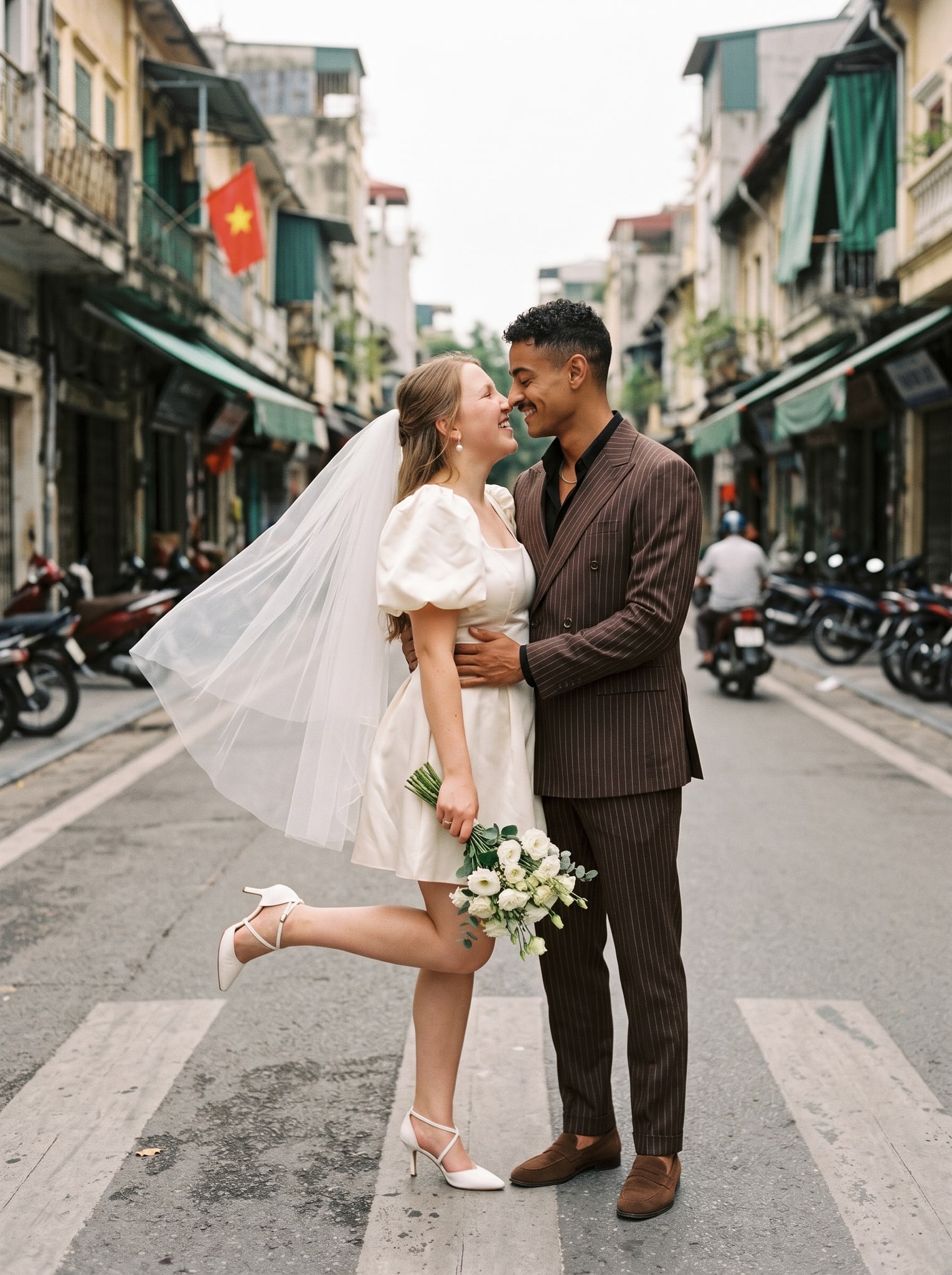
Yes. See our couple photoshoot and family photoshoot pages for group workflows. Couples can split one dress or wear coordinated ao dai; families in mixed or matching ao dai work well. Pricing scales with group size; ask us for a quote on WhatsApp.
How early should I book?
Autumn (October–November) and spring (February–March) fill 4–6 weeks ahead. Monsoon (May–August) and holidays (Tet, Christmas) book fast too. Message us as soon as you have a date in mind; we'll confirm or suggest alternatives.
Check dates
Send your dates, how many people and the style you like. We reply on WhatsApp in English with spots, timing and a quote.
FAQ
Can I wear my own ao dai, or must I rent from you?
You can wear your own. We'll advise on fit and care beforehand. If it needs a quick steam or seam adjustment, we handle it on arrival. Rental is optional; ask us for a quote on WhatsApp if you prefer a curated selection.
What if I've never worn an ao dai before?
We dress you on-site, show you how to walk and sit, and take 10–15 minutes for practice poses. By the first location, you'll feel natural. Non-model experience is standard here; we're used to guiding you through it.
How many edited photos do I receive?
Typically 150–250 images from a 2–3 hour session, depending on locations and outfit changes. We deliver all images; you choose your favorites to print or share. Editing includes color, light, and skin tone work; we don't remove landmarks or alter faces.
What if it rains on my shoot day?
We monitor the forecast and either reschedule within 2 weeks (no fee change) or pivot to covered Old Quarter arches and shophouses. Reschedules are free; cancellations more than 48 hours out incur no penalty.
Can I do an ao dai shoot with my partner or family?
Yes. See our [couple photoshoot](/couple-photoshoot) and [family photoshoot](/family-photoshoot) pages for group workflows. Couples can split one dress or wear coordinated ao dai; families in mixed or matching ao dai work well. Pricing scales with group size; ask us for a quote on WhatsApp.
How early should I book?
Autumn (October–November) and spring (February–March) fill 4–6 weeks ahead. Monsoon (May–August) and holidays (Tet, Christmas) book fast too. Message us as soon as you have a date in mind; we'll confirm or suggest alternatives.
More like this
Ao dai photoshoot in Hanoi
Ao Dai Photoshoot at Ho Chi Minh Mausoleum: Best Time & Tips
Ho Chi Minh Mausoleum area offers dramatic colonial architecture and red flags perfect for ao dai portraits, but timing and permit rules are critical.
Ao dai photoshoot in Hanoi
Ao Dai Photoshoot at Lotus Pond Sunrise in Hanoi
Lotus ponds offer Hanoi's most serene ao dai backdrop at dawn, but timing and location scouting are critical for empty frames and soft light. We share exact hours, seasonal water levels and how to avoid tourist crowds.
Ao dai photoshoot in Hanoi
Ao Dai Photoshoot Duong Lam Ancient Village: Best Time & Hanoi Guide
Duong Lam Ancient Village—45 minutes northwest of central Hanoi—offers weathered brick lanes, lotus ponds and colonial-era storefronts perfect for ao dai portraits. Best light and crowd conditions occur October–November and February–March mornings.