
Home › Blog › Ao dai photoshoot in Hanoi
Ao Dai Photo Shoot Hanoi at Tran Quoc Pagoda: Golden Hour Guide
By the Hanoi Photoshoot team · 2026-11-06
Trần Quốc Pagoda — Hanoi's oldest temple, built 545 CE on a narrow peninsula — is a top-tier ao dai shoot location for its layered roofs, river views and soft morning or late-afternoon light. Hanoi Photoshoot by Cáo Studio books two-hour sessions timed to avoid peak crowds (10 a.m.–3 p.m.) and includes in-house ao dai rental, makeup, hair and posing guidance for non-models. Sessions run during dry months (October–April) for clearest skies; May–September bring humidity and haze. Ask us for a quote on WhatsApp. The site enforces temple etiquette — no loud voices, respectful dress when entering sacred halls — and has narrow pathways; we know the rules and hidden angles other studios skip. Suit solo travelers, couples, families or first-time shoot-ers wanting an iconic Hanoi backdrop without generic tourist rushes. Check dates on WhatsApp
Why Trần Quốc Pagoda beats other Hanoi ao dai spots
You've seen Hoan Kiem Lake photos everywhere—reflections, cypress trees, the same four angles. Trần Quốc stands apart: the pagoda's nine tiers and scarlet doors frame ao dai silhouettes differently each hour; the river breeze moves fabric naturally; morning mist (November–January) creates depth no urban temple matches. We've shot here in all seasons and learned that 6–7 a.m. yields zero crowds and golden light across the water, while 4–5 p.m. bathes the roofs in amber without harsh shadows. The tradeoff: early mornings mean you travel to the Red River's northern edge (30–40 minutes from central Hanoi); late afternoons require flexibility if ceremonies run long. Compare this to the accessibility and energy of the Old Quarter for couple shoots or the intimate scale of solo travel portraits at lesser-known temples.
What time of year gives the clearest pagoda photos?
October through April is our peak season: temperatures drop to 15–25°C, humidity falls below 70%, and skies stay blue 80% of days. December–February bring occasional morning fog that softens light on water but clears by 9 a.m. May–September = high humidity, afternoon rain bursts and haze that dulls colors; we still shoot then for clients on fixed schedules, but expect softer contrast. Book three weeks ahead so we reserve the ideal dawn or dusk slot before tour groups arrive. Winter clothes layer well under ao dai; summer calls for breathable underlayers and more water breaks. Based on five years of seasonal patterns, January offers the sharpest light and fewest overcast days.
How do we pose you if you're not a model?
Most clients freeze or slouch when the camera appears. We guide you step-by-step: hand placement (one resting on the pagoda wall, one holding ao dai fabric), shoulder angle (slight turn, not squared), chin tilt (one finger width down, not stiff), and where to focus your eyes (water, middle distance, or back toward us—never the lens directly). We show examples on our phone so you see what works. For couples, we start with natural conversation to relax tension, then ask you to walk a pathway together or sit on the riverside steps—motion looks less posed than stillness. Families with young children: we play with them first, catch genuine smiles between set shots. The golden rule: the more you move between frames, the more we capture real moments; static posing produces stiff portraits.
What ao dai styles photograph best at temples?
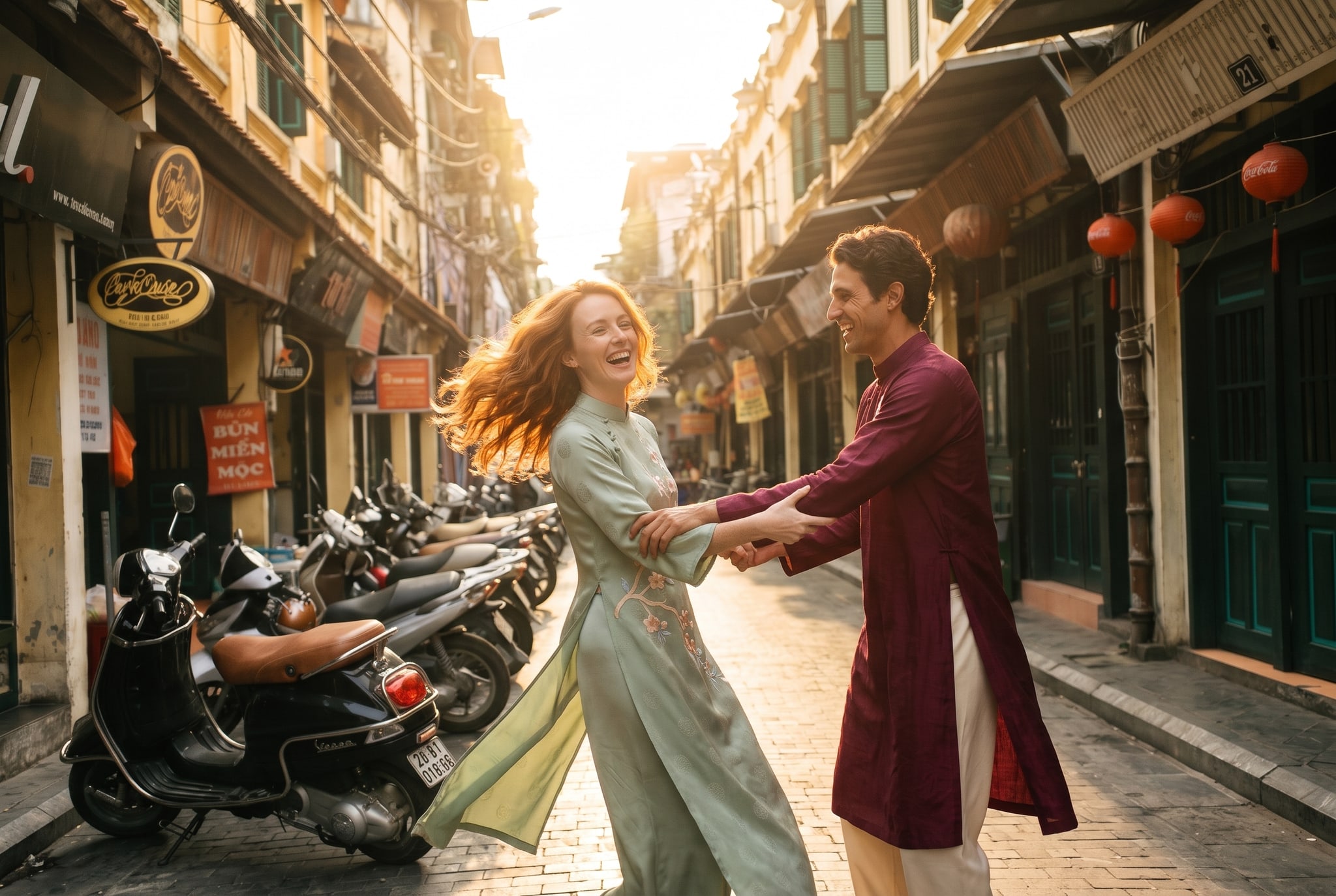
Classic cuts work universally—solid jewel tones (deep red, emerald, sapphire) and pastels (blush, lavender) read clearly against stone and water. Embroidered panels catch detail; metallic threading reflects morning light dramatically. Avoid busy patterns or neons that clash with centuries-old architecture. We rent ao dai in traditional and modern styles to suit your vibe: vintage-inspired for timeless shots, contemporary fitted cuts for fashion-forward Instagram posts, and ornate formal pieces for pre-wedding sessions. Ask which colors suit your skin tone and the light forecast for your date—we've learned that warm undertones shine in golden hour while cool undertones pop in blue-hour twilight (4:45–5:30 p.m.). Bring a silk scarf or shawl if you're sensitive to temple cold; it layers elegantly and adds visual texture.
| Style | Best light | Rented here? | Who chooses it | Why it works |
|---|---|---|---|---|
| Solid classic (jewel tone) | Golden hour | Yes | Couples, families, first-timers | Clean against stone; timeless |
| Embroidered formal | Early morning | Yes | Pre-wedding, graduation | Detail catches sunlight; statement piece |
| Pastel modern | Blue hour | Yes | Solo travelers, Instagram | Soft tones suit twilight; trendy |
| Vintage-inspired | Overcast (rare) | Yes | Romantic, heritage-focused | Texture reads well in even light |
What temple rules do tourists break, and how we avoid them?
Common mistakes: stepping inside active prayer halls (off-limits without invitation), speaking loudly near shrines, wearing shorts or tank tops (disrespectful to monks and worshippers), and standing on low walls for "better" angles (prohibited and unstable). We brief you before arrival—no exceptions. We never ask you to pose inside the main temple; all our frames happen on exterior grounds, riverside paths, and the pagoda's open terrace where light is superior anyway. If a monk or caretaker asks us to move, we move immediately; Trần Quốc staff know us and respect our professionalism, which keeps us welcome for future shoots. Graduation and family shoots here require extra sensitivity because ceremonies may be in progress—we schedule around them and confirm dates 48 hours before. Breaking these rules risks our booking privileges and disrespects a living place of worship.
How many hours do we book, and what's included?
Standard session: two hours. We arrive 15 minutes early to scout light, brief you on poses, and confirm ao dai fit. The first 90 minutes = active shooting (30–40 outfit changes or position shifts possible depending on your comfort). Final 30 minutes = backup shots, second location nearby (riverside pavilion, lower temple gate), or casual frames while you dress. Included: in-house ao dai rental (classic or modern), professional makeup and hair (traditional or contemporary), full digital retouching, and 50–80 final edited images delivered via cloud link within 10 days. Ask us for a quote on WhatsApp—pricing adjusts for group size, rush delivery, or print albums. Solo travelers often upgrade to a pre-wedding session if they're engaged; families sometimes add maternity portraits if a member is pregnant. Extensions beyond two hours are available; we charge per additional 30 minutes.
What to check before you book
- Light forecast: Confirm the weather 48 hours before; rain doesn't cancel but changes timing and mood.
- Temple access: Verify no major ceremonies conflict (we check the lunar calendar).
- Ao dai fit: Give us your usual dress size, height and bust measurement; we have 20+ styles in stock but custom fits take longer.
- Mobility: Pagoda stairs are steep; wear flat shoes. Paths are uneven; avoid heels unless purely for photos at ground level.
- Group dynamics: Three or fewer people = relaxed. Five or more = we limit to 90 minutes active shooting to manage energy.
- Delivery format: Choose cloud link, USB, or printed album at booking—rush delivery (3 days) costs extra.
- Edit style: Ask if you prefer natural skin tones or enhanced vibrancy; we match your Instagram aesthetic.
FAQ
Can we shoot ao dai at Trần Quốc if we're not religious?
Yes. The pagoda welcomes respectful visitors and photographers. You don't pray or enter inner shrines; you wear ao dai, we photograph you outdoors, and you respect the sacred space. Many non-Buddhist clients shoot here annually.
Do we need a permit to photograph at Trần Quốc?
No permit for personal or couple shoots. Commercial usage (advertising, brand campaigns) requires permission from temple authorities; we coordinate that if needed. Tourist photography is standard practice.
What if it rains on our shoot day?
We don't cancel. Light rain creates moody, cinematic reflections on water and stone; umbrella portraits are romantic. Heavy downpours (>10 mm/hour forecast) we reschedule. Decision made 2 hours before arrival based on live radar.
Can we wear a Western dress under the ao dai, or just undergarments?
Undergarments only, or a slip. Ao dai is fitted and high-necked; a dress underneath shows at the armholes and looks bulky. We provide an inner slip at no extra cost if you're uncomfortable going sleeveless.
How long does editing take, and can we see previews early?
Full editing takes 10 days (50–80 images). We send previews (5–8 unedited frames) within 24 hours so you see raw shots and suggest color grading direction. Rush delivery (3 days) costs extra; ask for pricing.
Is the pagoda location hard to reach from my hotel in the Old Quarter?
30–45 minutes by taxi or Grab depending on traffic. We meet you there or can arrange transport; ask us for ground logistics at booking. Early morning (before 7 a.m.) has minimal traffic.
Do we provide props like fans, flowers, or incense for the shoot?
Ao dai and styling are included. Additional props (silk fan, flower basket, traditional mirror) we source locally; cost varies. Let us know your vision and we quote it. Incense and religious items we don't use out of respect.
Check dates
Send your dates, how many people and the style you like. We reply on WhatsApp in English with spots, timing and a quote.
FAQ
Can we shoot ao dai at Trần Quốc if we're not religious?
Yes. The pagoda welcomes respectful visitors and photographers. You don't pray or enter inner shrines; you wear ao dai, we photograph you outdoors, and you respect the sacred space. Many non-Buddhist clients shoot here annually.
Do we need a permit to photograph at Trần Quốc?
No permit for personal or couple shoots. Commercial usage (advertising, brand campaigns) requires permission from temple authorities; we coordinate that if needed. Tourist photography is standard practice.
What if it rains on our shoot day?
We don't cancel. Light rain creates moody, cinematic reflections on water and stone; umbrella portraits are romantic. Heavy downpours (>10 mm/hour forecast) we reschedule. Decision made 2 hours before arrival based on live radar.
Can we wear a Western dress under the ao dai, or just undergarments?
Undergarments only, or a slip. Ao dai is fitted and high-necked; a dress underneath shows at the armholes and looks bulky. We provide an inner slip at no extra cost if you're uncomfortable going sleeveless.
How long does editing take, and can we see previews early?
Full editing takes 10 days (50–80 images). We send previews (5–8 unedited frames) within 24 hours so you see raw shots and suggest color grading direction. Rush delivery (3 days) costs extra; ask for pricing.
Is the pagoda location hard to reach from my hotel in the Old Quarter?
30–45 minutes by taxi or Grab depending on traffic. We meet you there or can arrange transport; ask us for ground logistics at booking. Early morning (before 7 a.m.) has minimal traffic.
Do we provide props like fans, flowers, or incense for the shoot?
Ao dai and styling are included. Additional props (silk fan, flower basket, traditional mirror) we source locally; cost varies. Let us know your vision and we quote it. Incense and religious items we don't use out of respect.
More like this
Ao dai photoshoot in Hanoi
Ao Dai Photoshoot at Ho Chi Minh Mausoleum: Best Time & Tips
Ho Chi Minh Mausoleum area offers dramatic colonial architecture and red flags perfect for ao dai portraits, but timing and permit rules are critical.
Ao dai photoshoot in Hanoi
Ao Dai Photoshoot at Lotus Pond Sunrise in Hanoi
Lotus ponds offer Hanoi's most serene ao dai backdrop at dawn, but timing and location scouting are critical for empty frames and soft light. We share exact hours, seasonal water levels and how to avoid tourist crowds.
Ao dai photoshoot in Hanoi
Ao Dai Photoshoot Duong Lam Ancient Village: Best Time & Hanoi Guide
Duong Lam Ancient Village—45 minutes northwest of central Hanoi—offers weathered brick lanes, lotus ponds and colonial-era storefronts perfect for ao dai portraits. Best light and crowd conditions occur October–November and February–March mornings.