
Home › Blog › Ao dai photoshoot in Hanoi
Ao Dai Photo Shoot at Hanoi Old Quarter: Light, Crowds & Outfit Tips
By the Hanoi Photoshoot team · 2026-11-06
An ao dai photo shoot at Hanoi Old Quarter means a 2–3 hour session with Cáo Studio in the maze of 36 streets, combining narrow-alley shots against weathered walls with temple courtyard backdrops, all coordinated in English on WhatsApp. We provide in-house ao dai rental, makeup and hair—you arrive, we handle styling. Best light windows are 6–7 a.m. (golden, near-empty) and 4–5:30 p.m. (soft backlight). The Quarter gets heaving by 10 a.m. with tour groups; solo travelers and couples book these early slots to avoid crowds and scaffolding. Ask us for a quote on WhatsApp; sessions include 80–120 edited digital images. Common mistakes: wearing white or black (washes out in midday sun), arriving at noon (harsh shadows), or not knowing temple photography rules (no shoes inside, tripods require permission). Book 2–4 weeks ahead for peak season (October–November, March–April). Check dates on WhatsApp
Why the Old Quarter Works for Ao Dai Sessions
The Old Quarter is Hanoi's most photogenic district for traditional dress because every corner tells a story—crumbling French colonial facades, hand-painted shophouse signs, and hidden temple courtyards create instant narrative depth. We shoot along Hang Bac (Silver Street), Hang Ngang and Cau Go because their tight geometry frames subjects against decades of patina and texture. Temple grounds like Dong Ba (weekday mornings only) and small family shrines offer serene stone-and-incense backdrops where ao dai fabric catches light beautifully. The catch: this density means shared spaces, vendor carts and foot traffic—timing and permits matter hugely. An Old Quarter photo guide details exact alleys, legal zones and what you can and cannot shoot near active shops.
What Time of Day Gives the Best Light?
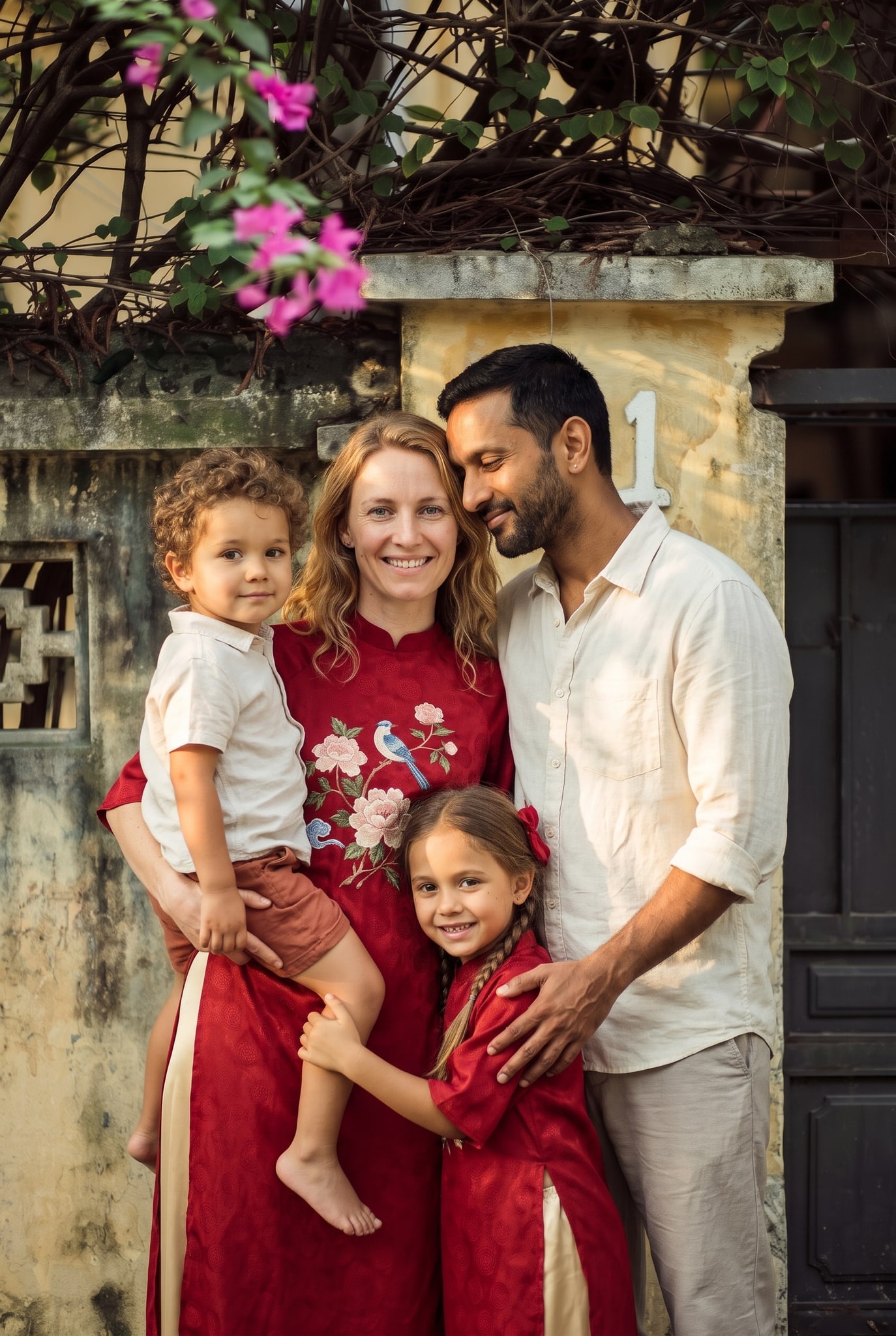
Early morning, 6–7 a.m., produces golden-hour glow with shadows long enough to define fabric folds and face contours, and fewer than five tourists per street. The Quarter's narrow lanes act as light modifiers—direct sun bounces off wet stone and creates a soft, diffused wash. By 10 a.m., tour groups flood in and harsh overhead light flattens features; midday (11 a.m.–3 p.m.) is unusable unless you stay under temple eaves or deep in covered passages. Late afternoon, 4–5:30 p.m., offers warm backlighting that makes ao dai silk glow and silhouettes against shopfronts, but you risk cloud cover April–September (rainy season). We schedule 80% of ao dai shoots between 6–8 a.m. or 4–6 p.m. to maximize quality and minimize photobomb risk. Early bookings sell out October–April; ask for off-peak slots (May–July) if flexibility matters more than light.
Which Ao Dai Style Suits the Old Quarter Setting?
The Old Quarter's colonial-era walls and temple stonework pair best with classic, solid-colored ao dai—reds, jewel blues, creams—because intricate patterns can compete with background texture. Brocade or silk with subtle sheen photographs better than cotton (catches light naturally). Loose, flowing cuts (traditional design rather than modern slim-fit) move better through narrow alleys and create dynamic shapes when walking or turning. Avoid bright neon or metallic fabrics that clash with muted heritage colors of the setting. We offer makeup and styling including ao dai rental in classic Vietnamese designs; you pick a color family and we tailor fit. Two-ao dai sessions (one classic, one bolder) work well if the shoot is long enough; ask us about outfit pairing when you message. Rent-vs.-bring choice depends on luggage space and travel insurance—rentals are already curated for the setting and climate.
How Do You Handle Temple Access and Photography Rules?
Dong Ba Temple, Tran Temple, and small family shrines in the Quarter permit photography in courtyards and outer halls but forbid shoes inside and require respectful distance from active worship. Tripods and flash are prohibited without express permission from monks or guardians; handheld natural-light shooting is the standard. We contact venues 5–7 days before your shoot to confirm access and brief you on exact rules—some temples close 12–1 p.m. for lunch, others restrict non-Vietnamese visitors on festival days. Your session may shift time or location if a temple is hosting a ceremony; we always have backup alley routes ready. Legal street photography is free, but vendor carts and shopfront displays can move unpredictably. We scout your date and specific outfit color 72 hours ahead to lock down timing. Never assume any public space is "always open"—we verify weekly.
How to Choose Between Solo, Couple or Group Sessions in This Location?
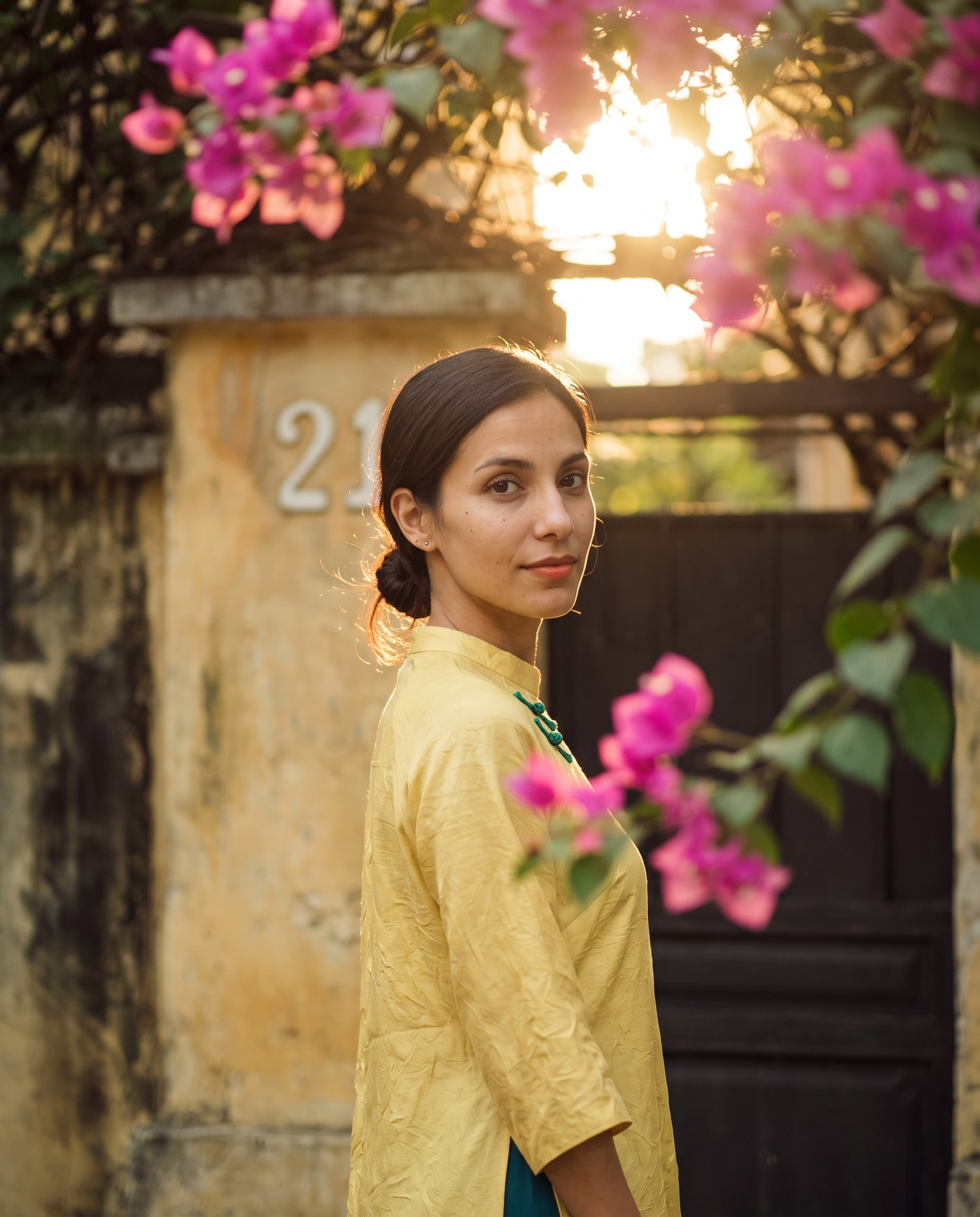
Solo travel portraits in the Old Quarter emphasize personal narrative—you walking, touching weathered walls, framed by shuttered windows—and work best with outgoing travelers who embrace posing. Couples sessions focus on interaction within tight spaces, often requiring alley-narrowing poses like back-to-back or hand-leading through doorways; for couple photoshoot bookings, both subjects need some comfort being photographed. Small family groups (2–3 people) fit comfortably; larger families (4+) need wider spaces or multiple location switches to avoid cramped framing. Solo sessions typically book 2–2.5 hours; couples add 30 minutes for wardrobe changes or mood shifts. Ask us for a quote based on group size and outfit count—we price per person and session length, not location, because the Old Quarter itself costs nothing but time and crew focus. Solo travel portraits and couple photoshoot have different pacing; couples often want candid interaction, solos often want polished individual portraits.
What Season Gives You the Most Reliable Conditions?
October–November and March–April are peak season in Hanoi: low humidity, blue skies, 18–25 °C air temperature ideal for ao dai (breathes well, no heavy sweating). December–February is cool and dry but mornings can be overcast; you gain empty streets but lose golden light some days. May–September (rainy season) means afternoon thunderstorms, 85%+ humidity making ao dai cling to skin, and muggy diffused light; early morning is your only window before heat peaks. Winter (January–February) offers the clearest air and longest shadows, but visitors bundle in jackets, and ao dai alone can feel sparse against the cold—some choose layered styling. Tourists peak May–August and October–November, so if you want solitude, book May–July early mornings or February midweek. We adapt posing and fabric choice to season—silk flows best in cool, dry months; cotton or linen blends suit summer. Ask about micro-season light patterns (e.g., March has clearer mornings than April due to tree pollen) when you contact us.
What to Check Before You Book
| Aspect | Solo Traveler | Couple | Family (3–4) |
|---|---|---|---|
| Ideal time slot | 6–7 a.m., any season | 4:30–6 p.m., Oct–Nov | 6:30–8 a.m., Mar–Apr |
| Session length | 2–2.5 hours | 2.5–3 hours | 2–3 hours |
| Outfit changes | 1–2 ao dai recommended | 2–3 for variety | 1–2 per person |
| Comfort with posing | Moderate to high | Both must relax together | Children must cooperate |
| Crowd impact | Avoidable at 6 a.m. | Notable after 8 a.m. | Notable after 8 a.m. |
| Backup plan needed | Yes (weather, temple) | Yes (festival closures) | Yes (energy levels) |
Pre-Booking Checklist
- Confirm your dates 4–6 weeks ahead (peak season books out); ask us to hold dates on WhatsApp.
- Choose ao dai color or bring a photo reference for styling input.
- Disclose any mobility needs or posing discomfort (stairs, kneeling, narrow spaces).
- Check your travel insurance covers the shoot location; confirm with us if you're renting ao dai.
- Agree on shot list: walking, posed, detail (hands, fabric), temple shots, alley candids.
- Ask about weather backup: do we reschedule free or offer a partial credit?
- Confirm digital delivery format (files size, editing timeline, watermarking if applicable).
- Communicate any cultural sensitivities (e.g., not wanting faces shown in certain frames).
Why Not Book a Generic Tour-Operator Photoshoot Instead?
Generic tour operators rent cheap ao dai from mass-market shops, assign rotating photographers unfamiliar with Hanoi light cycles, and deliver 30 unedited JPEGs in two weeks. We're a specialized ao dai photoshoot studio—our entire crew (photographer, makeup, hair) stays with you all session, speaks English fluently, and edits your images in-house. Our ao dai rentals are tailored for frame composition (hem length, sleeve cut, color saturation for light). We know which alleys are legal, which monks grant permission, and where to reposition if crowds or vendors block you. You pay more than a bargain tour, but you get authored images, next-day previews, and a reshoot offer if light or fit fails. Tour operators sell volume; we sell one session per day, fully staffed.
FAQ
Can we shoot in the Old Quarter if we don't speak Vietnamese?
Yes. We coordinate entirely in English on WhatsApp before, during and after your session. We handle all venue communication, permissions and logistics; you focus on the experience and your ao dai.
Is 6 a.m. really too early to feel natural on camera?
No. Early light flattens fatigue and jet lag; most travelers find 6–7 a.m. meditative and energizing once they see the empty streets. We warm up with walking and movement first, then posed frames.
What if it rains the day of the shoot?
October–March rain is rare and brief. We reschedule free within 5 days if heavy rain closes temples or makes alley runoff unsafe. May–September we book early (6–8 a.m.) to finish before afternoon storms. Ask about our weather guarantee when you book.
Do we need a permit to photograph in the Old Quarter?
No tripod permit is needed for handheld street photography on public streets. Temple courtyards require respectful behavior and permission from on-site guardians (which we obtain). Commercial photography (advertising, brand shoots) needs city permits; personal ao dai sessions do not.
How different are Old Quarter shots from Hoan Kiem Lake or Train Street?
Hoan Kiem Lake offers open water, trees and monuments—high-contrast backgrounds ideal for solid-color ao dai. Train Street is gritty, industrial, modern. Old Quarter is intimate, historic, textured—best for classic, narrative-driven portraits. Each suits different moods; pick based on your vision or ask us to combine in a longer session.
Can we do both an ao dai shoot and a couple photoshoot in one day?
Yes. Couple photoshoot sessions can include an ao dai outfit change. One morning can cover Old Quarter alley shots, then afternoon relaxation at a temple garden or quieter spot. Ask about full-day pricing and location logistics when you message us.
What if we want a pre-wedding shoot with ao dai in the Old Quarter?
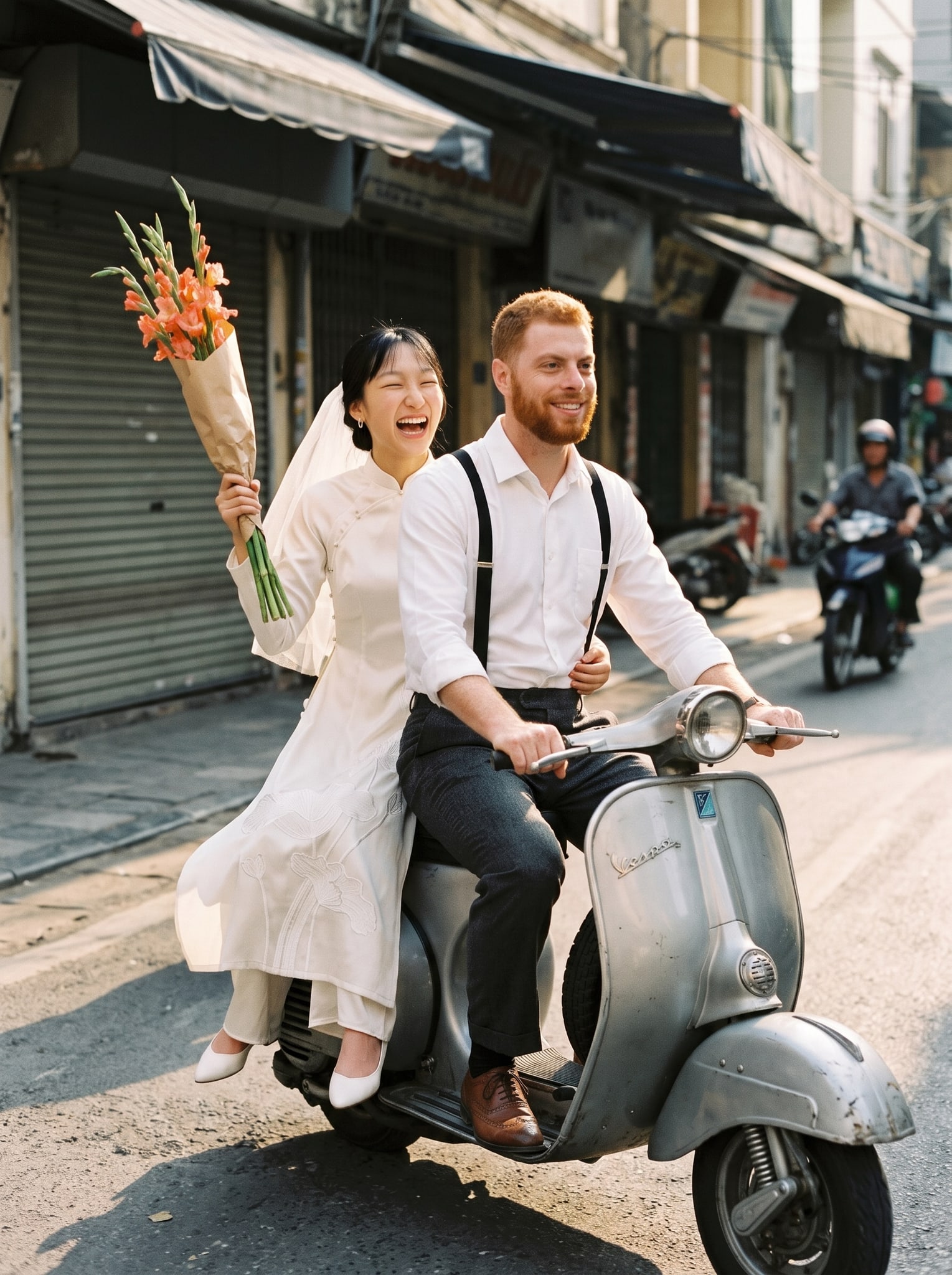
Absolutely. Pre-wedding photoshoot sessions often feature ao dai as a cultural element, especially in heritage settings like the Old Quarter. We build in extra time for ceremony-style poses and intimate couple moments. Coordinate with us early because pre-wedding bookings fill 2–3 months ahead in peak season.
How many edited images do we receive, and when?
Typical Old Quarter sessions deliver 80–120 edited digital images within 7–10 days. We provide downloadable files (full-resolution JPEGs); ask about prints, albums or other products when you contact us. Editing includes color correction, cropping and minor retouching; heavy alterations are quoted separately.
Check dates
Send your dates, how many people and the style you like. We reply on WhatsApp in English with spots, timing and a quote.
FAQ
Can we shoot in the Old Quarter if we don't speak Vietnamese?
Yes. We coordinate entirely in English on WhatsApp before, during and after your session. We handle all venue communication, permissions and logistics; you focus on the experience and your ao dai.
Is 6 a.m. really too early to feel natural on camera?
No. Early light flattens fatigue and jet lag; most travelers find 6–7 a.m. meditative and energizing once they see the empty streets. We warm up with walking and movement first, then posed frames.
What if it rains the day of the shoot?
October–March rain is rare and brief. We reschedule free within 5 days if heavy rain closes temples or makes alley runoff unsafe. May–September we book early (6–8 a.m.) to finish before afternoon storms. Ask about our weather guarantee when you book.
Do we need a permit to photograph in the Old Quarter?
No tripod permit is needed for handheld street photography on public streets. Temple courtyards require respectful behavior and permission from on-site guardians (which we obtain). Commercial photography (advertising, brand shoots) needs city permits; personal ao dai sessions do not.
How different are Old Quarter shots from Hoan Kiem Lake or Train Street?
[Hoan Kiem Lake](/spots/hoan-kiem-lake) offers open water, trees and monuments—high-contrast backgrounds ideal for solid-color ao dai. Train Street is gritty, industrial, modern. Old Quarter is intimate, historic, textured—best for classic, narrative-driven portraits. Each suits different moods; pick based on your vision or ask us to combine in a longer session.
Can we do both an ao dai shoot and a couple photoshoot in one day?
Yes. [Couple photoshoot](/couple-photoshoot) sessions can include an ao dai outfit change. One morning can cover Old Quarter alley shots, then afternoon relaxation at a temple garden or quieter spot. Ask about full-day pricing and location logistics when you message us.
What if we want a pre-wedding shoot with ao dai in the Old Quarter?
Absolutely. [Pre-wedding photoshoot](/pre-wedding) sessions often feature ao dai as a cultural element, especially in heritage settings like the Old Quarter. We build in extra time for ceremony-style poses and intimate couple moments. Coordinate with us early because pre-wedding bookings fill 2–3 months ahead in peak season.
How many edited images do we receive, and when?
Typical Old Quarter sessions deliver 80–120 edited digital images within 7–10 days. We provide downloadable files (full-resolution JPEGs); ask about prints, albums or other products when you contact us. Editing includes color correction, cropping and minor retouching; heavy alterations are quoted separately.
More like this
Ao dai photoshoot in Hanoi
Ao Dai Photoshoot at Ho Chi Minh Mausoleum: Best Time & Tips
Ho Chi Minh Mausoleum area offers dramatic colonial architecture and red flags perfect for ao dai portraits, but timing and permit rules are critical.
Ao dai photoshoot in Hanoi
Ao Dai Photoshoot at Lotus Pond Sunrise in Hanoi
Lotus ponds offer Hanoi's most serene ao dai backdrop at dawn, but timing and location scouting are critical for empty frames and soft light. We share exact hours, seasonal water levels and how to avoid tourist crowds.
Ao dai photoshoot in Hanoi
Ao Dai Photoshoot Duong Lam Ancient Village: Best Time & Hanoi Guide
Duong Lam Ancient Village—45 minutes northwest of central Hanoi—offers weathered brick lanes, lotus ponds and colonial-era storefronts perfect for ao dai portraits. Best light and crowd conditions occur October–November and February–March mornings.